
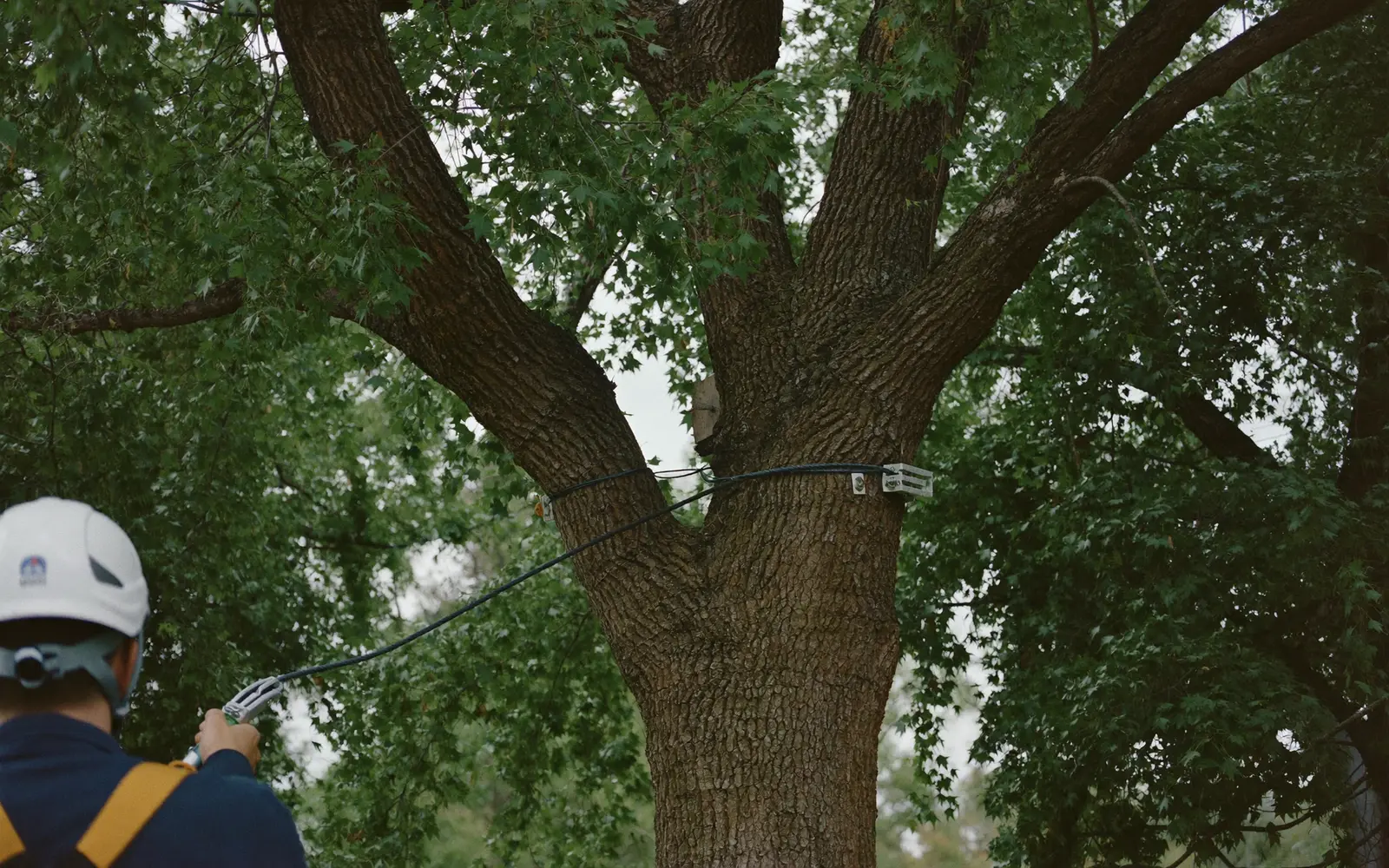
Redmond Summit Tree Service installs cabling and bracing systems to support weak forks, split trunks and heavy limbs in Redmond trees worth keeping. Cabling ties parts of the crown together so a storm can’t pull them apart. Bracing uses steel rods through the wood to hold a split or a weak union together. Done right and inspected regularly, it can add many years to a valuable tree.
When Cabling Makes Sense
- Co-dominant stems: two trunks of similar size growing from a V-shaped fork, common in bigleaf maples, which can split apart.
- Included bark: bark trapped inside a tight fork, preventing a strong wood connection.
- Heavy horizontal limbs over a roof or patio.
- Storm-cracked forks that are still mostly intact, when the tree is otherwise healthy.
- Heritage or landscape trees you want to keep for shade, privacy or value.
When It Doesn’t
Cabling won’t save a tree with root rot, a hollow main trunk, a failing root plate or a dead top. Those are hazard tree problems. An honest assessment comes first.
Types of Systems
| System | How it works | Best for |
|---|---|---|
| Static steel cable | Steel cable anchored with eye bolts through the limbs | Forks that already show cracks, heavier support |
| Dynamic (synthetic) cable | Flexible rope-like cable, no drilling, allows natural movement | Preventive support on healthy forks |
| Through-bolt bracing | Threaded steel rods through a split or weak union | Splits and cracks low in the tree, combined with cables above |
| Guying | Cable from the tree to a ground anchor | Young or replanted trees, temporary support |
Installations follow the ANSI A300 standard for supplemental support systems: cables placed about two-thirds of the way from the fork to the branch tips, hardware sized to the limb, and no wrapping cables around branches, which girdles them.
Cabling + Pruning
Cabling works best together with weight reduction. Thinning and shortening the heavy limbs reduces the load the cable has to carry in a storm. Most jobs are a pruning visit with cabling added.
Maintenance
- Inspect every cabled tree once a year and after big windstorms.
- Check for cable tension, hardware wear and wood growing over the anchors.
- Replace dynamic systems on schedule.
No Redmond permit is needed for cabling or bracing itself, but if the assessment shows the tree should be removed instead, see the permit guide.
Related Services in Redmond
Questions We Hear
How long does tree cabling last?
Steel cable systems typically last 10–20 years with inspections. Dynamic (synthetic) systems usually need replacing every 8–10 years. Every cabled tree should be inspected yearly and after major storms, because the tree keeps growing around the hardware.
Will cabling make a dangerous tree safe?
It reduces the risk of a weak fork or heavy limb failing. It doesn't fix root rot, a decayed trunk or a leaning root plate. If the defect is in the roots or the main trunk, removal is usually the safer answer.
How much does tree cabling cost?
A single cable in a medium tree often costs a few hundred dollars. Large trees with multiple cables and through-bolt braces cost more. It's usually paired with pruning to reduce weight on the weak section, which is part of what makes cabling work.