
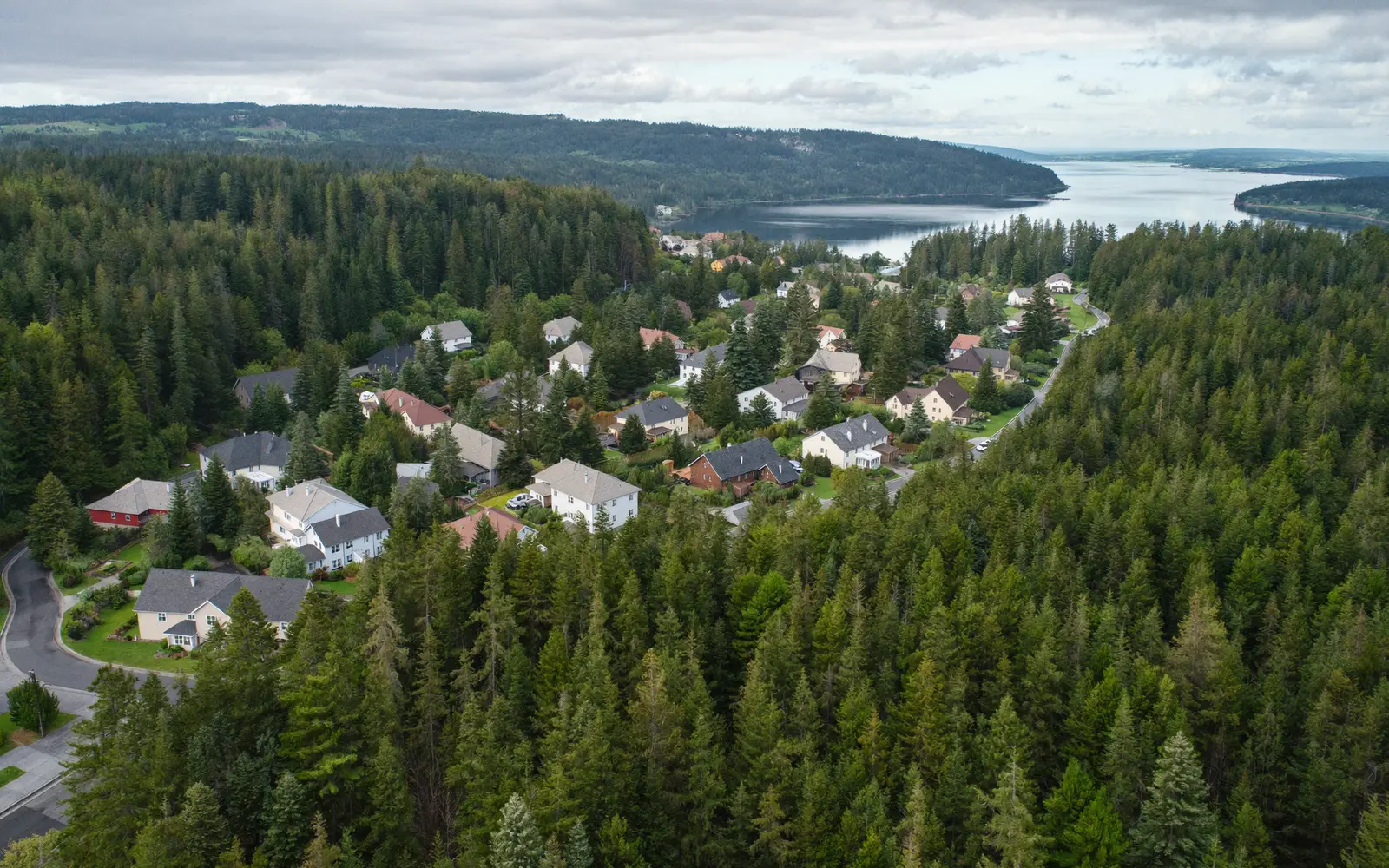
Redmond is replacing the tree rules it adopted in 1998. The update rewrites RZC 21.72 (Tree Protection), its definitions in RZC 21.78, and the archaeological resources section RZC 21.30.070, with City Council adoption expected in Q1 2027. This page from Redmond Summit Tree Service summarises what the city has published so far, mainly the version 2 draft presented to the Planning Commission on August 12, 2026, and what it means for homeowners and builders.
Draft, subject to change. The city states the drafts may change before adoption. A version 3 draft was scheduled for September 2026. We update this page as the process moves. Current rules today: Redmond tree permit guide.
Why Redmond Is Rewriting Its Tree Code
| 1998 | Today | |
|---|---|---|
| Population | 44,383 | 82,380 (2025) |
| Housing units | 18,705 | 37,186 (14,254 single-family + 22,932 multifamily) |
| Jobs | 52,812 | 99,169 (2024) |
Redmond is inside the Growth Management Act’s urban growth boundary, so it has to absorb growth: Redmond 2050, middle housing, light rail centres. At the same time, its tree canopy was 38.1% in 2019, with ongoing loss. The update tries to balance the two.
Timeline
| Date | Step |
|---|---|
| Feb–Apr 2026 | Code drafting and research |
| May–Jul 2026 | Community engagement (questionnaire: 60 responses) |
| Jul 22, 2026 | Planning Commission introduction |
| Aug 12 & Sep 23, 2026 | Planning Commission study sessions |
| Oct 14, 2026 | Public hearing |
| Nov 4 & Nov 18, 2026 | Study sessions and recommendation |
| Dec 2026 | Planning Commission report approval |
| Jan–Mar 2027 | City Council process and adoption |
| Apr 2027 | Learning sessions for the public and developers |
| ~Jun 2027 | Expected effective date (set at adoption) |
Key Changes in the Draft
1. Development moves from “35% of trees” to tree credits. Today, development must keep at least 35% of significant trees. The draft instead sets a minimum number of tree credits:
Required credits = (Tree Canopy Site Area ÷ 1,000 sq ft) × multiplier
The Tree Canopy Site Area is the lot minus critical areas and buffers, shoreline vegetation areas, rights-of-way, private road tracts, submerged land and utility easements. Multipliers in the version 2 draft:
| Zone | 1–2 units per lot | 3+ units per lot | Commercial / other |
|---|---|---|---|
| Semi-Rural (RA-5), Open Space | 3 | 2 | 1 |
| Neighborhood Residential (NR) | 2 | 1.5 | 1 |
| NMF, NMU, Marymoor Village | 1.5 | 1 | 0.75 |
| Downtown, Overlake | n/a | 0.5 | 0.25 |
| All other zones | 1 | 0.75 | 0.5 |
35% of the required credits must come from keeping existing trees, and bigger trees earn more credit. Replacement trees earn 1.5 credits for conifers and 1 for deciduous trees, so the draft deliberately favours planting conifers.
2. Higher fee-in-lieu when trees can’t be replaced on site:
| Tree | Current | Draft (V2) |
|---|---|---|
| Significant | $626.32 | $1,300 |
| Landmark | $2,505.31 | $3,000 |
| Heritage (new category) | — | $5,000 |
3. New “Heritage tree” category alongside landmark trees, with its own section of the code.
4. Culturally Modified Trees protected. Trees modified by Indigenous people, such as peeled cedars and basket trees, can’t be removed without a permit from the state Department of Archaeology and Historic Preservation (DAHP).
5. Stronger tree protection during construction. A defined Tree Protection Zone with no fill, excavation, staging or traffic, 4-foot high-visibility fencing installed before any land disturbance, and city verification at the pre-construction meeting.
6. Downtown and Overlake are exempt from the strict retention requirements, to allow urban-centre growth.
What It Means for Homeowners
- Removing a tree from your existing yard: the draft keeps the yearly removal limits and replacement rules (1 per significant tree, 3 per landmark). Little changes day to day.
- A leaning tree: same path as today. Show it’s a hazard with photos or an arborist report and use the hazard permit; otherwise a standard removal permit within your limit.
- Removing a tree for a lake view: shoreline trees fall under the Shoreline Master Program; trees may be pruned by a qualified tree professional; topping is prohibited; removal needs a Tree Removal Permit. See view pruning.
- Building one or two ADUs: this is where the change bites. You’ll calculate minimum tree credits for your lot, and 35% of them must come from retained trees. Plan the trees with your designer early. See arborist reports.
How to Weigh In
The draft code, presentations and comment options are on the city’s Let’s Connect Redmond trees page and the city’s Tree Code Update page (redmond.gov/2313). The city accepts comments until Council adoption.
Related Pages
Questions We Hear
When does Redmond's new tree code take effect?
The city's schedule has the Planning Commission finishing its review in late 2026 (study sessions in November, report approval in December 2026), City Council review and adoption in January–March 2027, and public learning sessions in April 2027. Staff have pointed to an effective date around June 2027; the final date is set at adoption.
Will the new code change how many trees I can remove from my yard?
For developed single-family lots (removal not tied to construction), the version 2 draft keeps the same structure as today: yearly significant-tree removal limits plus replacement trees. Replacement ratios (today 1 per significant tree, 3 per landmark tree) were still being edited in late 2026, so check the adopted version. The biggest changes are for development, which moves to a tree credit system.
Can I still comment on the draft?
Yes. The city says comments are accepted until the City Council adopts the code. Drafts and the comment form are on the city's Let's Connect Redmond trees page, and Planning Commission and Council meetings are open to the public.