
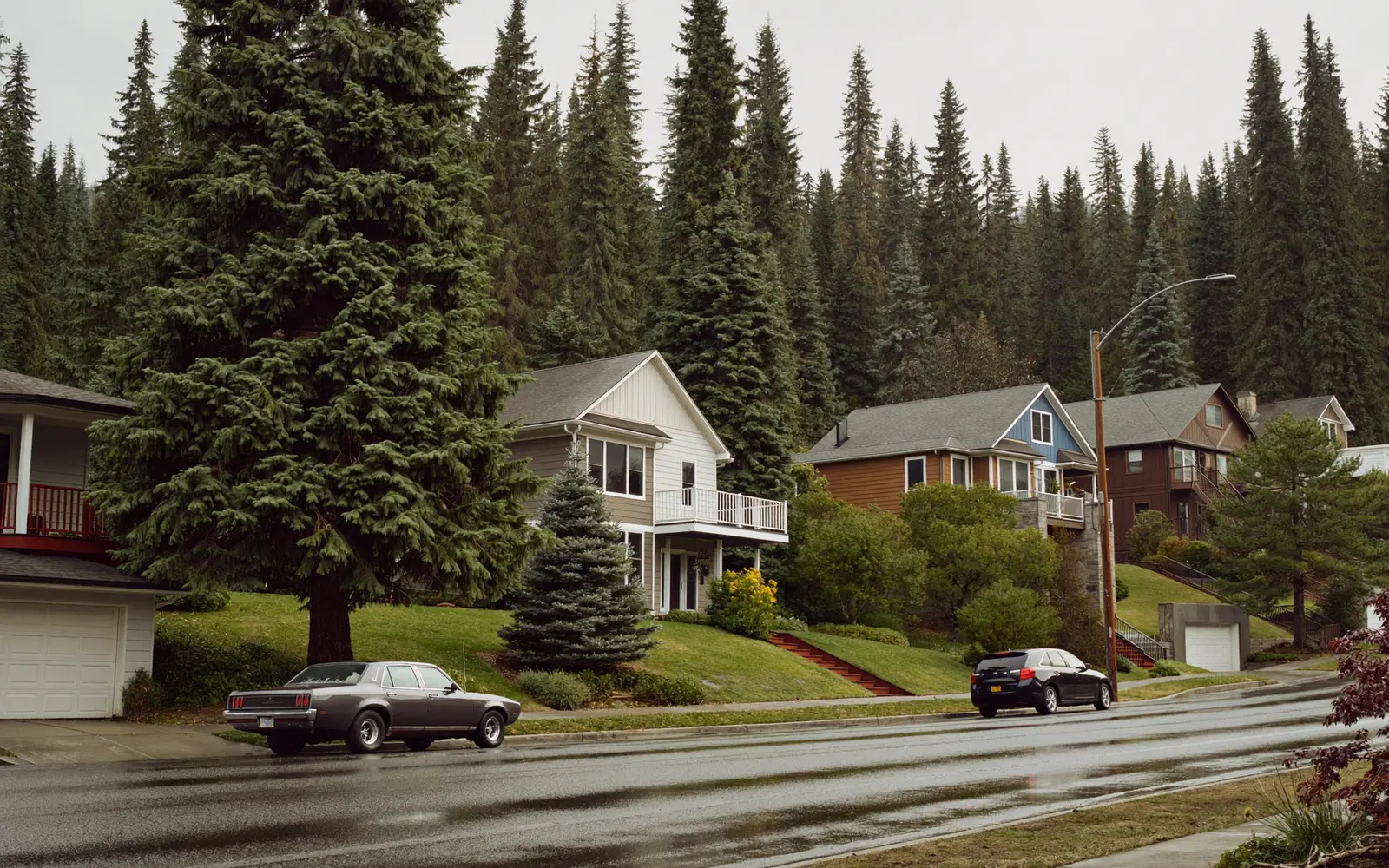
Redmond Summit Tree Service works in the Sammamish Valley, the flat river valley that runs north–south through Redmond along the Sammamish River and the Sammamish River Trail. It’s Redmond’s most open landscape: farmland, sports fields, business properties and trails, with tree lines along the river, ditches and field edges rather than neighbourhood forest.
Tree Work in the Valley
Most valley work is for property owners, farms, businesses and managers rather than typical suburban homes:
- Cottonwood and willow management along the river, ditches and field edges.
- Windbreak and tree-line maintenance on agricultural and open properties.
- Storm cleanup. Wind sweeps the open valley floor, and tall valley trees catch it (storm damage cleanup).
- Clearing and brush work around buildings, fences and access roads (land clearing).
- Commercial landscape care for business properties along the valley (commercial tree service).
Valley Trees
| Tree | What to watch for |
|---|---|
| Black cottonwood | Fast growth, weak wood, sudden limb drop, shallow roots in wet soil |
| Willows | Brittle stems, splitting; regrow quickly after cutting |
| Red alder | Short-lived, decays from the inside |
| Oregon ash and bigleaf maple | Along drainages; heavy limbs |
| Douglas fir | On drier edges and hillsides at the valley margins |
Rules on the Valley Floor
- River and wetland buffers are critical areas. Trees there can’t be removed unless hazardous, and felled wood generally stays in place.
- Shoreline jurisdiction applies near the Sammamish River.
- Commercial lots can remove at most five significant trees per acre per year for thinning or landscape maintenance.
- Farmland and open-space parcels may have additional land-use conditions. Check before large-scale clearing.
Full permit details are in the Redmond tree permit guide.
Access
The valley’s flat ground and open space make equipment access easier than on Redmond’s hills, so many valley removals can use bucket trucks and direct felling rather than climbing, which often lowers the cost. The exception is anything near the river buffer, where machines stay out.
Popular Services Nearby
Questions We Hear
Why are cottonwoods such a problem in the Sammamish Valley?
Black cottonwoods thrive on the wet valley floor and along the river. They grow very fast, reach great heights, and have relatively weak wood, so they drop large limbs, sometimes on calm summer days, and fail in storms. Near buildings, roads and parking lots they need regular inspection.
Can trees along the Sammamish River be removed?
Trees along the river and in its buffer are protected under Redmond's critical area and shoreline rules. They can generally only be removed or altered if a certified arborist finds them hazardous, and wood usually stays in place.