
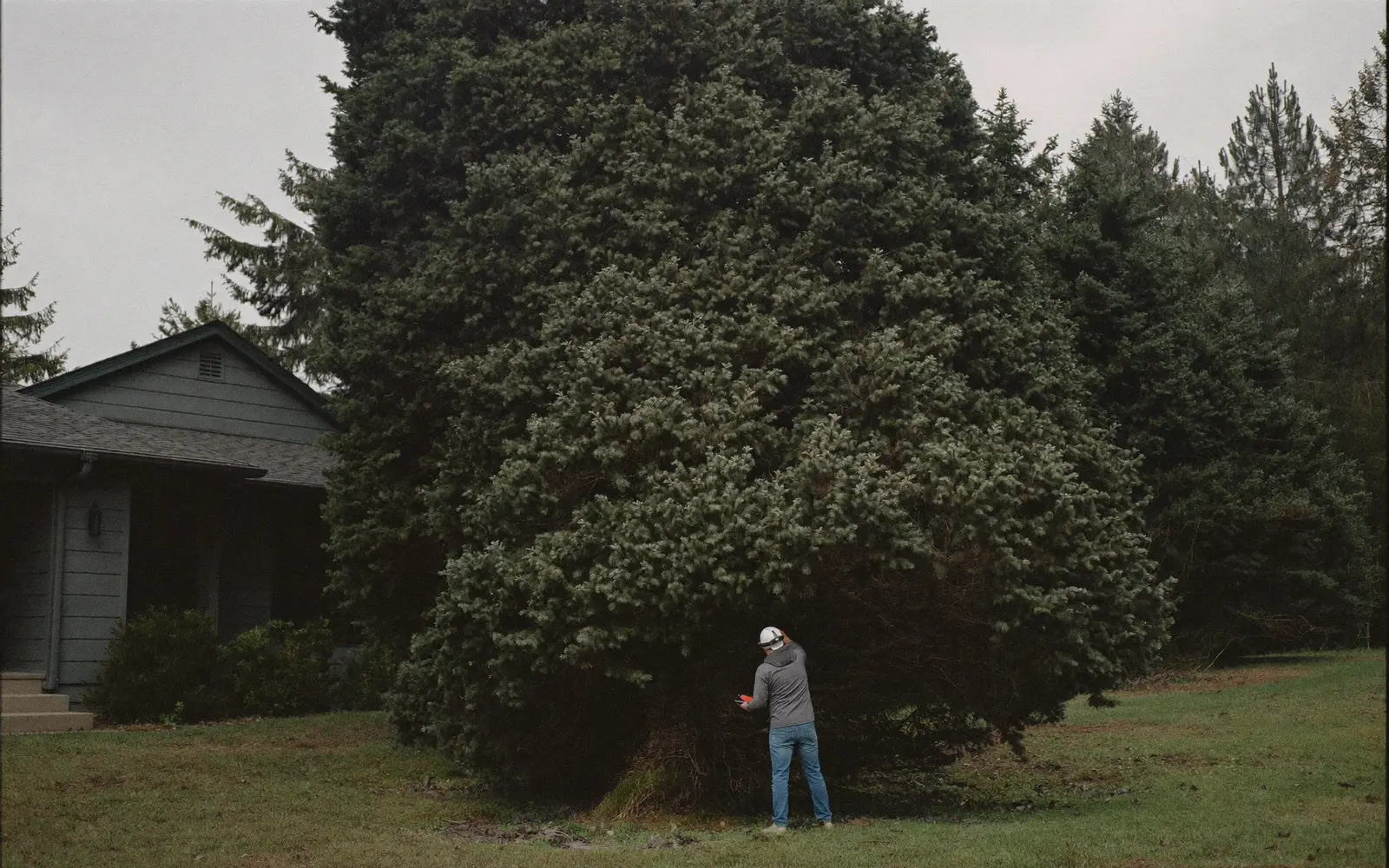
Redmond Summit Tree Service removes dead and dying trees from Redmond properties before they fail on their own. Dead trees dry out and get brittle fast. A dead fir can drop its top or large limbs within a year or two, and dead trees are unpredictable to climb, so the earlier they’re removed, the safer and cheaper the job.
Why Trees Are Dying in Redmond
| Cause | Trees affected | What you’ll see |
|---|---|---|
| Laminated root rot | Douglas fir, grand fir, hemlock | Thinning, yellowing crown; trees in a cluster declining; sudden uprooting |
| Drought stress after hot, dry summers | Western red cedar, hemlock, fir | Cedar dieback: browning from the top or inside of the crown |
| Bark beetles | Stressed Douglas firs | Reddish sawdust in bark crevices, pitch tubes, rapidly browning crown |
| Construction damage | Any species | Decline 2–5 years after grading, trenching or a new driveway over the roots |
| Old age | Red alder, birch | Dead branches, fungal conks, hollow trunks |
| Waterlogging | Trees in poorly drained spots | Decline after drainage changes or new hard surfaces |
Dead Tree vs. Dying Tree
Dead trees are the priority. They’re structurally unpredictable, get worse every winter, and are dangerous to climb, so removal often means a lift or a crane instead of a climber.
Dying trees give you options. Some can be saved with care (watering through summer, removing deadwood, protecting roots). Some are clearly on the way out, and taking them down while the wood is still sound is cheaper and safer than waiting.
Root Rot: The Hidden One
Laminated root rot is the most common reason healthy-looking Douglas firs suddenly fall over in Redmond. It decays the roots from the inside, so the tree loses its anchor before the crown shows much decline. It spreads underground from tree to tree, which is why you often see several firs in a neighbourhood failing in a row. If a fir near your house has neighbours that died or blew over, have it checked.
Removing Dead Trees in Redmond
- Dead, dying and diseased trees go through Redmond’s Hazard Tree Declaration, with a certified arborist’s tree health assessment, and no city fee.
- For trees that are obviously and visibly dead, the city may accept photos instead of an arborist report. Consult the city first.
- Dead trees in critical areas (wetlands, stream buffers) are often left as wildlife snags if they can’t hit anything. If they’re a hazard, an arborist recommends mitigation.
More in our Redmond tree permit guide.
After Removal
Grind the stump so it doesn’t sprout fungus or attract carpenter ants (stump grinding). Where root rot was the cause, replant with a less susceptible species: western red cedar, pines and most broadleaf trees tolerate laminated root rot far better than Douglas fir.
Related Services in Redmond
Questions We Hear
How do I know if my tree is dead or just dormant?
For deciduous trees in winter, scratch a small twig with a fingernail: green underneath means alive, brown and dry means that part is dead. Evergreens shouldn't be bare at all, so a fir or cedar that's mostly brown, or dropping needles from the top down, is in serious trouble. Bark falling off in sheets is another sign.
Do I need a permit to remove a dead tree in Redmond?
A dead tree still needs city sign-off, but it goes through the Hazard Tree Declaration, which has no fee. For trees that are obviously and visibly dead, the city may accept photos instead of an arborist report. Check with the city before submitting.
Can a dying tree be saved?
Sometimes. Drought stress and some insect problems can be managed if caught early. Root rots like laminated root rot can't be cured, and infected Douglas firs usually need to come out before they fail. An arborist can tell you which you're dealing with.